

400 words; 2 minute read time
We don’t always notice it, but that quiet voice in our head shapes the way we speak, act, and see ourselves. It turns small moments into doubts and awkwardness into fear.
The Voice in Your Head
It usually begins in the smallest moments, right before speaking, right before acting, when a tiny voice starts hissing:
“Are you crazy, don’t say that.”
“Why not?”
“It’s embarrassing.”
That’s all it takes. A pause, a hesitation, and suddenly everything makes you feel like you’re out of your mind.
You won’t hear the voice shouting, you will feel it eating your brain little by little.
“Think before you speak.”
“I do.”
“You overthink.”
That’s the trap of overthinking.
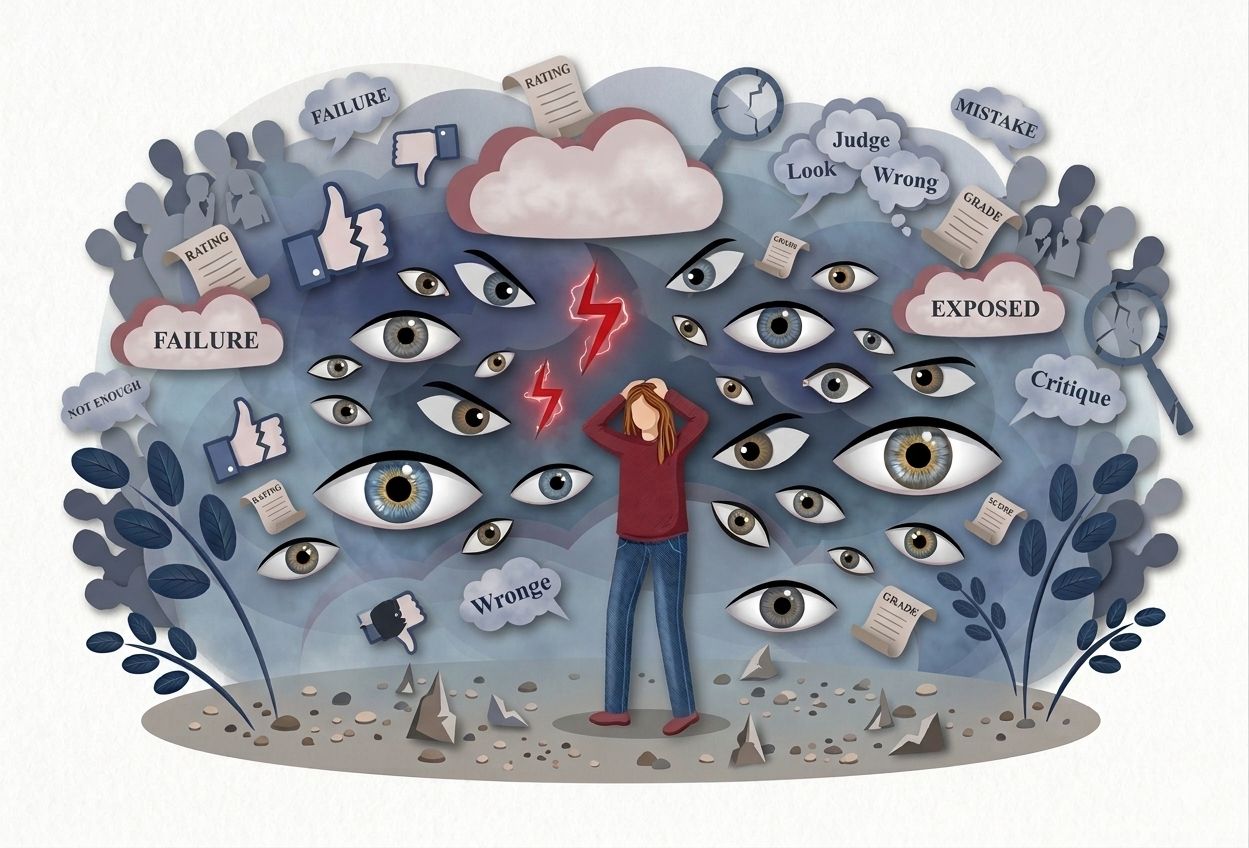
Thinking stops being helpful when it starts replaying random moments, turning quick awkward replies into imagined catastrophes. As if one sentence could destroy you, when in reality, nobody even noticed.
“Remember what you said to the waiter?”
“Oh my God, not this again…”
The Invisible Rules
Blend in, don’t stand out.
Don’t say anything unusual, just be basic.
“So just… be like everyone else?”
“If you don’t want to be judged, then yes.”
It sounds logical, almost protective. However, the more you adjust yourself, the less you recognize who you are.
“People will criticize you.”
“Who?”
“…Literally, everyone.”
Discomfort is treated like danger, awkward moments like threats.

When “Fitting In” Fails
Even if you change your appearance or soften your voice, you still feel insecure. Being accepted isn’t the same as being truly noticed.
“If I follow all of your instructions, will I fit in?”
“Absolutely.”
“And will I be happy?”
Silence.
Fitting in was never about happiness, it was about approval.
“What happens if I just say it?”
“You might mess up.”
“And then?”
“You’ll be fine.”
That’s the part the voice never emphasizes: embarrassment isn’t fatal. You survive it.
The Real Goal
Maybe the goal was never to “fit in.”
Maybe it was to stop overthinking every word, laugh through awkwardness, and to finally hear your own mind.
“Can you be quiet for a second?”
“…I’ll try.”
And in that silence, something unfamiliar appears.
For once, there’s space to hear something else.
Yourself.
Since when did every word start needing permission to exist?

What really stood out to me is how subtle and persuasive that inner voice can be. This article captures that struggle in such a real and relatable way, and it’s comforting to know that so many of us are going through the same process.
What you wrote about is something very common, especially for people our age. We often tend to listen to that voice and that makes us spiral like crazy. It’s only with time and experience that we learn to quiet that voice down.
What I find interesting is how convincing that voice is. It doesn’t sound negative at first, it sounds reasonable. That’s what makes it dangerous.
I get what you mean. That voice is so subtle it almost feels responsible at first. Like it’s trying to protect you, not hold you back. But over time you realize it’s just repeating old fears in a more “reasonable” tone.
And the strange part is how normal it starts to feel, until you finally notice how much quieter you’ve become because of it.
This reflection echoes a struggle that stayed with me for a long time, until I came to understand that happiness is never the reward of approval. It begins the moment you stop rehearsing every word, dare to embrace awkwardness, and accept that embarrassment is not a failure, but a passing moment. I have learned that nothing truly falls apart when you “mess up.” You remain. You move forward. You grow.
The real shift, for me, was learning how to quiet that inner voice that constantly asked for permission. In that rare and fragile silence, something else revealed itself, something more honest. My own voice. Once you begin to hear it, even faintly, you realize that being yourself carries a quiet, enduring peace that fitting in never quite offered. It is, simply, the beginning of authenticity.
This really spoke to me. It’s crazy how long you can live thinking you have to get everything “right,” when in reality it’s just fear talking. And then slowly you realize no one is actually keeping score the way you think they are. I like how you describe that moment of silence when your own voice finally comes through, it’s subtle, but it changes how you move through everything after that.